
Appeals court blocks Miami’s election date change, finding it ‘unconstitutional’
The city of Miami’s decision to postpone the scheduled November 2025 election to 2026 without voter approval was unconstitutional, Florida’s Third District Court of Appeal has ruled, siding with a lower court.
On Thursday, the appellate court handed down its ruling in the lawsuit filed by mayoral candidate Emilio González, who sued last month after the Miami City Commission voted 3-2 to postpone the election to 2026 via ordinance, rather than through a ballot referendum.
Thursday’s ruling marked another victory for González, a former city manager.
“Let this be a warning to every politician in Miami: the days of corruption without consequence are over,” González said in a statement.
Dwayne Robinson, outside counsel for the city, said in a statement that the city is “exploring further appellate options.”
“We appreciate the court’s swift review of this matter and its acknowledgment of the valid reasons for aligning City of Miami elections with state and county elections,” Robinson said.
The city’s charter states that elections “shall be held on the first Tuesday after the first Monday in November in odd-numbered years.” Changes to Miami’s charter require voter approval via a ballot referendum — a process that the City Commission circumvented by passing an ordinance that not only postponed the election but also gave the city’s current elected officials an extra year in office.
The city has argued that by passing an ordinance, it technically changed the city code — not the charter, which still states that elections are to be held in odd-numbered years. That put the charter in direct conflict with the code, which stated the opposite as a result of the new ordinance.
The Third DCA did not buy that argument.
“Relabeling the Ordinance does not alter its substantive character. Just as a rose bears thorns regardless of what it is called, so too does this enactment carry binding legal implications. It is, in truth, a charter amendment dressed in lesser clothes — fragrant in title but thorned with consequence,” Judge Monica Gordo wrote.
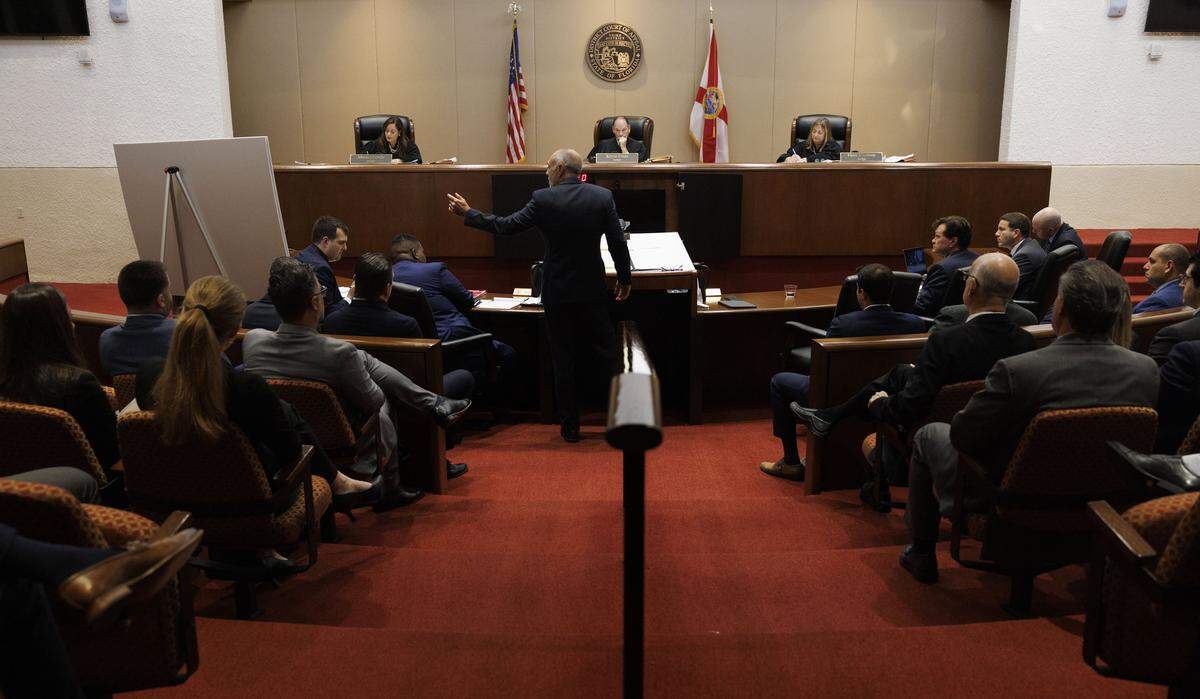
The judges upheld a ruling from Miami-Dade Circuit Court Judge Valerie Manno Schurr, finding that voter approval is required to change the city charter. The appellate court judges concluded that the city “may not enact an ordinance which effectively amends its Charter without submission of the issue to the will and vote of its constituents by referendum.”
“Therefore, as the trial court properly declared, the Ordinance is unconstitutional,” Gordo wrote.
READ THE OPINION: View the appeals court ruling that says Miami election delay is ‘unconstitutional’
In a statement, Commissioner Damian Pardo, who sponsored the ordinance, said, “We congratulate those who fought hard for their point of view and prevailed in the court today.”
Pardo added that he remains committed to increasing voter turnout and decreasing election costs — two goals he set out to achieve by moving to even-year elections — and that he plans to call for a special meeting to introduce legislation switching the city to even-year elections, presumably via ballot referendum.
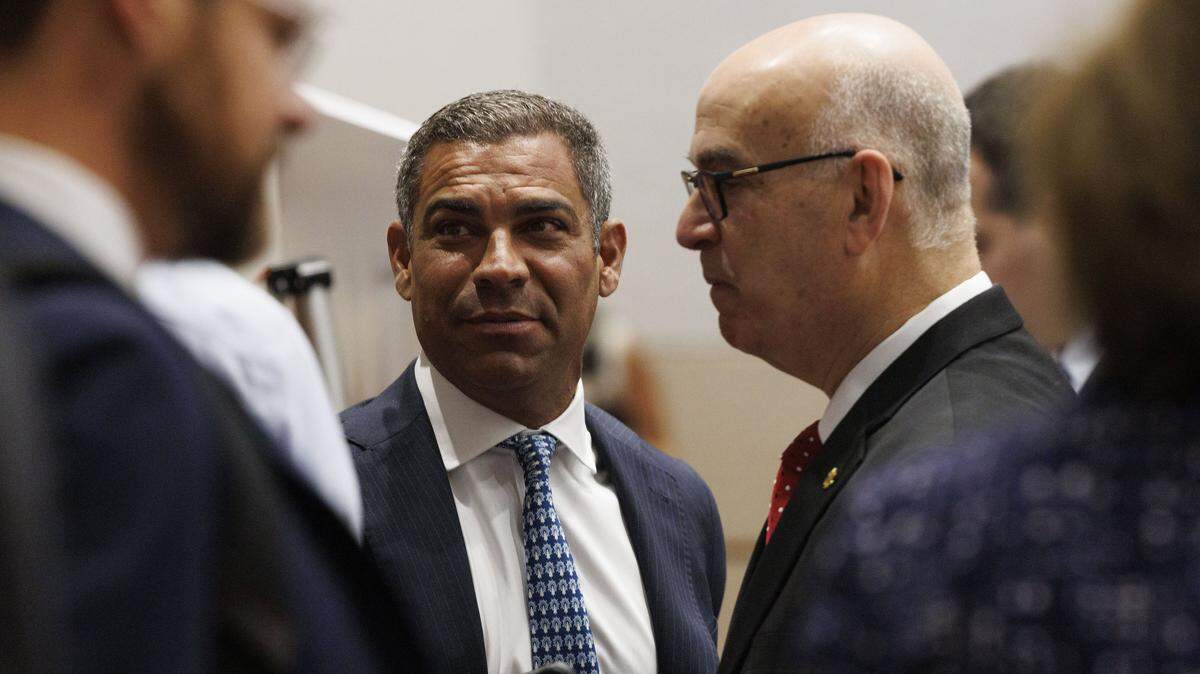
Mayor Francis Suarez, who lobbied behind the scenes for the election date change, attended Tuesday’s hearing before the appellate court. Suarez said Thursday that, “We appreciate the court’s swift review of this matter and its acknowledgment of the valid reasons for aligning City of Miami elections with state and county elections.”
READ MORE: Miami mayor is lobbying behind the scenes for proposal to skip November election
But the mayor isn’t giving up yet.
“However, we are exploring further appellate options,” Suarez said. “We believe the court’s expedited review may have led to an oversight of binding Supreme Court precedent that is central to the outcome of this dispute.”
Candidates react
Several candidates had already filed to run for mayor in the November 2025 election, including former City Commissioner Ken Russell and current Miami-Dade County Commissioner Eileen Higgins.
“Instead of focusing on what they should do, Miami’s electeds constantly focus on what they can get away with,” Russell said in a written statement Thursday. “Exploiting loopholes to circumvent the law has the same effect as breaking the law and the court made that clear.”
He added that if city officials are “truly committed to even year voting” rather than “staying in office beyond their term limits,” they will put the question to voters this November.
Higgins agreed with Russell, saying that moving from odd- to even-year elections should be decided by voters, not commissioners.
“Let’s do it the right way,” Higgins said, proposing shortening the next mayor’s term in order to align with even-year elections “to modernize our democracy without undermining it.”
“It’s time to move past the chaos and dysfunction at City Hall and that starts by electing a Mayor committed to restoring trust and delivering results for the people of Miami,” Higgins said.
Commissioner Joe Carollo, who has long been mulling a run for mayor, said Thursday that he had to do more “soul searching” and “praying” before officially deciding whether to file for the race. Carollo was a vocal opponent of the election date change, joining Commissioner Miguel Angel Gabela as one of two dissenting votes.
“This shows that in America, you cannot steal the right of people to elect their leaders through the democratic process of elections,” Carollo said after the Third DCA ruling came down.
He went on the allege that the idea to move the election date “was born out of a desperate individual that wanted to stay in power,” referring to Suarez, the termed-out mayor who supported the measure and is currently serving his 16th consecutive year in Miami City Hall.
This story was originally published July 31, 2025 at 11:33 AM.
.jpg)