
What the Supreme Court TPS ruling means for South Florida Haitians
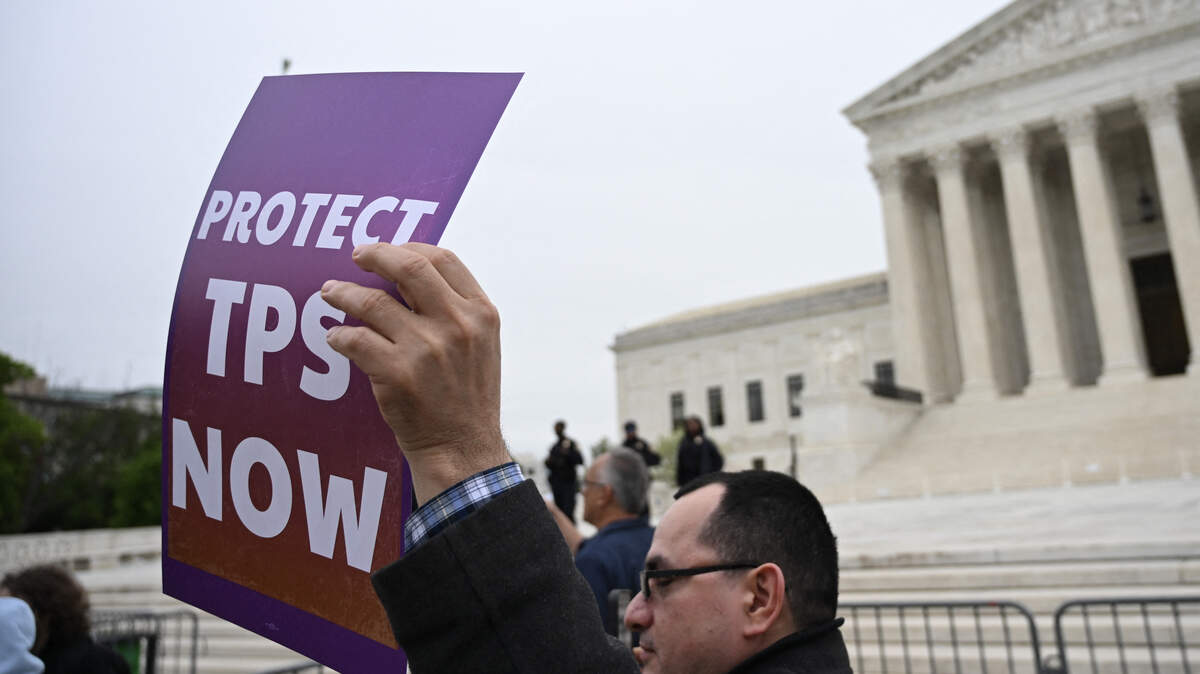
The news many Haitian immigrants living in South Florida were dreading became a reality on Thursday – a Supreme Court ruling gave the Trump administration the green light to strip them of deportation protections and work permits.
The ruling was a major blow to immigrants with Temporary Protected Status, which shields immigrants from countries in turmoil from deportation. For the Trump administration, whose mass deportation agenda has relied on stripping immigrants of their legal status, the ruling is another victory toward the goal of cracking down on all immigration — both legal and illegal.
READ MORE: Supreme Court greenlights Trump termination of TPS for 350,000 Haitians, Syrians
As a result of the decision, over 350,000 Haitians and Syrians are now facing the possibility of being deported back to their homelands in crises, which advocates, experts, officials and Haitians say will expose them to life-threatening danger.
Haiti is experiencing extreme gang violence, widespread hunger, and political instability. And following the ousting of longtime dictator Bashir Al-Assad, Syria continues to have armed conflict and sectarian violence. Trump’s own State Department has issued “Do Not Travel” advisories for both countries.
Here’s what South Floridians need to know about the Supreme Court decision and what it means for our community.
What did the Supreme Court ruling say?
In its 6-3 decision, the Supreme Court said judges are barred from reviewing executive branch decisions about Temporary Protected Status that are non-constitutional claims. The TPS statute, created by Congress in 1990, says that “there is no judicial review of any determination…with respect to designation, or termination, or extension.” That means the law can only be challenged in the courts if someone is alleging Constitutional right violations, not violations of congressional legislation or executive regulations.
The decision stems from two emergency requests the Trump administration made to the Supreme Court after lower courts repeatedly upheld the protections for Syria and Haiti. The justices consolidated the requests into one case and heard oral arguments in April.
The ruling, penned by Justice Samuel Alito, reverses lower court opinions upholding the protections and sends the case back to lower courts for next steps.
Alito also said in the ruling that the one constitutional claim the TPS holders make — that racial discrimination from President Donald Trump and other top officials played a role in the Haiti termination — is unlikely to succeed on the merits.
Trump has repeatedly made offensive remarks about Haitians. He has called the Caribbean country a “s---hole” and falsely claimed during the 2024 presidential campaign that Haitian immigrants eat cats and dogs. Alito said Trump’s remarks were not “overtly racial” in the ruling.
Justice Elena Kagan wrote the dissent, which Justices Ketanji Brown Jackson and Sonia Sotomayor joined. The dissent says that the ruling makes the courts “powerless to intervene” even when the Department of Homeland Security violates federal law on TPS designations and that Trump’s statements showed “racially discriminatory purpose” in decision-making.
The evidence provided by plaintiffs “includes statements by the President so repellent and racially inflected that the majority declines to put them in print,” wrote Kagan.
Experts say the decision makes other countries with active TPS designations vulnerable to being terminated by the Trump administration in the future and any court orders upholding TPS protections uncertain.
What does the ruling mean for Haitians with TPS?
For now, TPS protections for Haitians and Syrians remain in place for up to 32 days, which is how long the Supreme Court has to issue its mandate to lower courts, said Ira Kurzban, a veteran Miami immigration attorney whose firm is representing the Haitian plaintiffs. The next step for TPS holders would be to challenge the termination of constitutional claims if there are grounds for it since that’s what the Supreme Court ruling allows for judicial review.
Judicial challenges have focused on whether DHS violated the law when ending TPS. The Supreme Court banned challenges based on statutes such as the Administrative Procedures Act, the U.S. law that governs how federal agencies create and follow regulations. Internal documents published in the Supreme Court case last week show that DHS had not consulted the Department of State on country conditions before ending them, which would be a violation of the Administrative Procedures Act.
READ MORE: ‘Noem lied’: Emails suggest DHS ignored federal law to end TPS for 350k Haitians
So far, the Department of Homeland Security has not provided TPS holders with guidance on its webpage following the Supreme Court ruling. But Homeland Security did celebrate the Court ruling in a statement, and DHS General Counsel James Percival said it reaffirmed that TPS “was always supposed to be temporary and can be cancelled at the appropriate time.”
How many TPS holders live in Florida?
Florida is the state with the largest population of beneficiaries of Temporary Protected Status. As of March 31, 2025, there were about 404,000 beneficiaries of TPS in the Sunshine State. Most of them are from Venezuela (57%) or Haiti (36%), according to the Congressional Research Service.
The Supreme Court already allowed the Trump administration to strip over 500,000 Venezuelans of their TPS last year, prompting DHS to detain hundreds of former beneficiaries.
Nationwide, there are nearly 350,000 Haitians with TPS and about 6,000 Syrians.
What advice do lawyers have for people affected by the recent ruling?
Mark Prada, a Miami-based immigration attorney, told the Herald that TPS recipients affected by the ruling “need to get lawyers, first and foremost.”
Prada said that he expects immigration enforcement to ramp up its efforts in South Florida soon to target Haitians left without deportation protections after TPS is revoked. He’s also concerned that many beneficiaries have previous deportation orders and that their TPS was the only thing protecting them from deportation.
Many TPS holders don’t necessarily have asylum claims, because they can’t show persecution for example, but would be put in danger if returned to their home country.
“A lot of people have deportation orders because they came seeking asylum or refuge, and it didn’t work because their cases were more about the general problems in their country,” said Prada. TPS was created, in part, to address these gaps in the asylum system, Prada said.
READ MORE: Trump administration deported Florida Keys man with TPS to Haiti. He’s back in the U.S.
Even before the Supreme Court order, the Trump administration was illegally deporting Haitians, including a longtime Marathon resident. The federal government let him return two weeks later. Federal law explicitly protects TPS holders from deportation while the designation is in effect.
Is anything else being done to help Haitians with TPS?
Yes. In March, the House of Representatives passed a bill that would require the Department of Homeland Security keep and extend Haiti’s Temporary Protected Status. Rep. Ayanna Pressley of Massachusetts forced the House vote with a discharge petition, a rare procedural maneuver.
READ MORE: Effort to force House vote to save Haitians’ TPS secures bipartisan support
Last week, over a dozen Democratic senators, including Sen. Chuck Schumer, introduced legislation to designate Haiti for TPS. However, it faces an uphill battle in the upper legislative house, which is controlled by the Republican Party.
And on Friday, Rep. Debbie Wasserman Schultz announced during a press conference in Sunrise that she would introduce a legislation known as the TPS Review Act. The bill would amend the federal TPS law to make a broader scope of judicial review possible. It would also allow Congress to reverse TPS terminations with a vote and create a documented process for executive agencies to evaluate TPS designations.
Kurzban, the veteran lawyer, said that TPS holders and their loved ones who are citizens must mobilize to get their senators to vote for the legislation.
“The next midterm elections are crucial in light of the Court decision to slam the courthouse door on the faces of all TPS holders,” said Kurzban. “The million plus TPS holders whose status was taken away from them should urge their [citizen] relatives to vote out all Republicans who silently agreed with Trump’s horrible policies.”